20 Best Facts For Choosing Floor Installation
Wiki Article
Nail Down Vs. Glue Down Vs. Floating Hardwood Explained
Ask three flooring specialists in Philadelphia what method hardwood flooring should be installed and you might get three different solutions -- not because any of them are correct, but because the right method of installation is based on the specifics of your home. The type of subfloor, the floor's elevation, the species, moisture conditions as well as your long-term plans for the area all factor into the final decision. A majority of homeowners only realize this when they've already made the decision this is why it's crucial to know the difference before you start getting estimates. This is how each method works and when each one makes sense.
1. Nail-Down is the Standard for Solid Hardwood
Nail-down, also called staple-down, involves mechanically fastening each hardwood plank to the subfloor using an pneumatic nailer. It's the most traditional method and the most used approach for solid hardwood installation in Philadelphia houses with boards or OSB subfloors. The bond is strong, the floor feels solid beneath your feet and there's no adhesive which could fail in time. The majority flooring contractors will opt to nail-down solid hardwood on subfloors made of above grade wood without hesitation.
2. Your subfloor can determine if nailing down Is Even an Option
For nail-down wood, you need a hardwood subfloor -that is a complete stop. Concrete slabs, that are found within basements and in certain ground-floor areas of Philadelphia homes and Delaware County ranches, cannot accept nails or staples in any meaningful way. If the subfloor you have is concrete nail-down cannot be put on the plan, no matter what flooring material you choose to use. A flooring professional who is licensed will detect this during a survey of the site. A novice person might not be able to spot it until after the job has begun.
3. It's a Glue-Down that opens up concrete slab Installations
The glue-down hardwood installation employs a full-spread glue that is glued to the subfloor before planks are placed in. This is the preferred method to use when you're looking to install real hardwood over concrete -- basements in Montgomery County colonials, ground-floor slabs that are used in newer South Jersey construction, or any place where nail-down flooring isn't feasible. If it's done correctly, a glued-down floor is extremely rigid and is extremely rigid. The downside is that removal later can be a bit more complicated than taking down a nail or floating floor.
4. The floating Hardwood Isn't Connected to the Subfloor at all
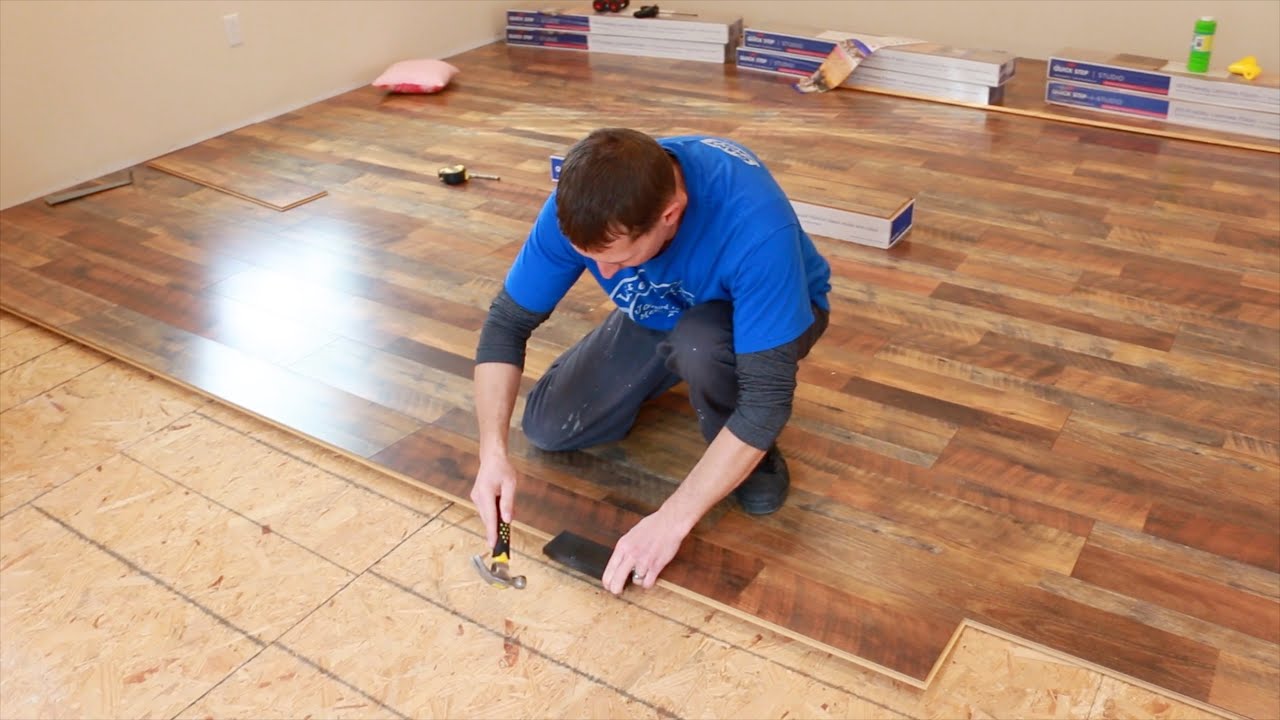
Floating installation means the planks join at their edges, and are essentially placed on the subfloor's surface as one unit, moving as a unit rather than being fixed in place. It's less time-consuming to install, less difficult to take off, and more tolerant of subfloor imperfections than nail-down. Engineered wood is the best alternative for floating installation in Philadelphia since its layered structure can handle the slight sway associated with floating better than solid wood does.
5. Floating floors have a distinct Feel underfoot
This is something that visits to showrooms do not always convey. A floating hardwood floor has a slight give when you walk on it. It's not too dramatic yet noticeable when compared to a nail-down floor, which is secured in place to the floor. It's for most homeowners a thing of the past. Some, in particular those who are upgrading from nail-down hardwood, it takes adjustment. If this is an issue for you then ask your flooring installer for with a flooring sample floating prior to making a decision.
6. Nail-Down is the most labor intensive Cost of the Three
From a simple installation point of view nail-down hardwood demands the longest and is most skilled this is evident in your labor estimates from Philadelphia flooring contractors. The subfloor needs to be clean even, flat and thick. Planks require acclimation. The nailer demands careful technique to avoid splitting. Flooring installers who do nail-down well are earning their rate. If you get a low hardwood installation cost, it's worth asking specifically about the way they're planning to fasten it.
7. Glue Down increases material costs but it also reduces the need for some labor Variables
Adhesive can be expensive, and glue-down projects require the right adhesive that's appropriate for the subfloor and hardwood combination. It is true that installing glue-down over a properly-prepared concrete slab will be faster than nailing on a subfloor in need of major repairs. Flooring professionals across Bucks County and Delaware County often recommend glue-down for engineered hardwood in slab-on-grade homes specifically since it brings real wood appearance with practical installation advantages.
8. Moisture Testing Should Happen Before any Method is selected.
This step is typically skipped over on budget jobs and creates problems within the year. Concrete slabs are known to emit moisture-vapor as well as excessive moisture. This can cause glue-down adhesive to fail while floating floors break. Subfloors made of wood in older Philadelphia rowhomes can carry the excess moisture that comes from crawlspaces or poor ventilation. A reliable moisture reading prior to installation isn't an option -it's the way a reputable flooring professional decides if a particular method is safe and which prep work is required before.
9. Refinishing Compatibility is a matter of method.
Solid hardwood nail-down may be sanded several times over its life -which is among the most compelling reasons to choose regardless of the cost of installation. In general, engineered hardwood with glue down can get refinished either twice or three times dependent on the thickness of the wear layer. A floating engineered wood might have a lower refinishing capability. If long-term maintenance of your wood floor is part of your strategy include this into the procedure before installation, not later.
10. The Right Method Is an a Site-Based Decision, not a Preference The Right Method is a Site Decision, Not a Preference
Homeowners often come to the flooring consultation with a firm idea about which installation method they would like to use. The most experienced flooring installers in Philadelphia will gently reorient the conversation to the type of residence actually allows. The most reliable flooring experts aren't trying to promote a particular technique -They're taking a look at your subfloor's moisture levels or floor level and your wood species and recommending accordingly. The site-specific knowledge is the thing that separates a professional licensed from someone who owns nailers. Read the best
LVP flooring Philadelphia PA for blog info including luxury vinyl flooring Philadelphia, laminate floor contractors Philadelphia, licensed flooring installers Philadelphia, flooring installation Philadelphia, kitchen tile flooring Philadelphia, hardwood floor installation cost Philadelphia, flooring installation near me Philadelphia, licensed flooring installers Philadelphia, hardwood floor installation cost Philadelphia, luxury vinyl plank installation Philadelphia and more.

Serving Bucks, Montgomery & Delaware County How To Get There
Homeowners in the Philadelphia suburbs often assume that flooring contractors in the city can't travel to the extent that they believe local contractor are always preferred for work within their region. There's a lot more to it. The top flooring companies in the region are able to work seamlessly within Philadelphia, Bucks County, Montgomery County, Delaware County and eventually into South Jersey because the demand across the metro area is interconnected, and the housing stock has enough commonalities to make the regional expertise genuinely valuable. What differs between these areas the types of housing, the era of construction, subfloor conditions and neighborhood aesthetics is something you should consider before you start removing names of contractors from the results of a search and thinking that the geography alone is a reliable quality filter.
1. Each County Has Its Own dominant housing profile
Bucks County skews toward older townhouses in towns like Doylestown and Bristol alongside more recent suburban construction further north. Montgomery County mixes mid-century colonials and ranches surrounded by affluent Main Line properties that have distinct expectations for renovation. Delaware County has dense inner-ring suburbs with older rowhome adjacent housing in close proximity to the city as it transitions to more sprawled residential properties as you go west. These variations are significant for flooring due to the subfloor's conditions, ways of construction, as well as moisture levels vary significantly depending on the area and time of constructionanyone who is familiar with the area can recognize these patterns without having them explained.
2. Subfloor Condition Vary Significantly across the States
It is true that older Delaware County homes close to the Philadelphia border -- Darby, Upper Darby, Lansdowne usually share the same subfloor and moisture problems typically found in urban rowhomes. Bucks County properties further from the urban center often have more stable subfloors in recent construction, but are more prone to moisture problems in older properties along close to the Delaware River. Montgomery County's Main Line homes may have wooden floors in the subfloors which haven't been retouched in 60 years. A flooring contractor who has worked across all three counties can recognize these patterns, and rates accordingly rather than being surprised during the course of work.
3. Hardwood Flooring Expectations Are Through the Main Line
The Montgomery County's Main Line corridor -- Bryn Mawr, Haverford, Wayne, Ardmore -- has a redevelopment culture in which hardwood flooring expectations for quality are particular. The homeowners of these areas typically want wide planks white oak, custom staining matched to millwork and cabinetry, and refinishing services that meet the standards of a beautiful aesthetic. Flooring companies who work in Montgomery County regularly understand that the standard of finish in these markets is greater than what you would expect from a suburban renovation, so they set up and staff accordingly.
4. Bucks County's Construction Newer Creates Different Installation Conditions
Newer residential developments of Bucks County -- particularly in Warminster, Horsham, and parts further north are typically open-plan with greater square footage, slab on grade construction in certain areas and subfloors cleaner than older homes in the county. LVP flooring is especially appropriate for the newer Bucks County homes: the greater area benefits from LVP's efficiency and cost, while the open plans suit floating installation and slab-grade flooring make waterproof flooring an ideal option for the living areas.
5. Delaware County's Inner Suburbs Have Philadelphia's Flooring Problems
Flooring contractors who understand Delaware County well will tell you that houses in Upper Darby, Drexel Hill and Havertown present identical subfloor requirements as Philadelphia proper -- board subfloors that are damp from aging foundations and the hardwood floor that was last touched over a decade ago. Flooring restoration within these regions is always in need because the housing stock has hardwood floors that have survived for long enough to be worth saving but has been neglected long enough to appear like it's not. It is essential to get that assessment right. someone who understands the difference between a floor in need of refinishing and one that needs replacement.
6. South Jersey Serves as a Natural Extension in the Philadelphia Market
South Jersey -- Cherry Hill, Voorhees, Moorestown, Haddonfield and surrounding areas -- is part of the real Philadelphia flooring market, even though it sits across the state line. A majority of Philadelphia-area flooring professionals also have licensing in Pennsylvania along with New Jersey and service South Jersey regularly. Homeowners in South Jersey searching for flooring installers shouldn't restrict their search to New Jersey-only contractors -- the regional pool of experienced flooring professionals includes many Philadelphia-based and Pennsylvania-suburban companies who cross the river routinely.
7. Travel Fees and Service Area Policies Vary -- Ask at the beginning
Some flooring companies in Philadelphia has a presence in all three counties and not every county-based company is able to cover the entire county. Some contractors apply travel surcharges to jobs extending beyond a certain distance from their home base, while other integrate it into their pricing without discussing it separately. When you receive flooring estimates from Bucks, Montgomery, or Delaware County, ask specifically whether the quote is inclusive of any transportation or service-area premiums. A contractor who's honest regarding this upfront is handling the business relationship in a professional manner. Anyone who does this after the contract has been discussed may not be so.
8. Permit Requirements may vary based on Municipality
Pennsylvania registration for home improvement contractors is valid throughout the state, but specific municipalities across Bucks, Montgomery, and Delaware County sometimes have their particular registration or permit requirements for contractors working within their borders. This is more common specifically for flooring than structural work, however it's worth checking with your contractor that they're aware local rules in your particular township or municipality. The flooring installers that are licensed and work regularly across the region know which municipalities have requirements and incorporate them into their plan without prompting.
9. Regional Contractors establish networks that Benefit Customers
It is a flooring specialist who's had experience across Philadelphia and surrounding counties for decades has supplier relationships with subcontractor networks, as well as professional connections that a younger or more specific local business doesn't have. This is important when a project reveals issues with subfloors that require the assistance of a carpenter, if a specific hardwood species needs an urgent source, or when tiles require a waterproofing expert. The best flooring contractors in the region are nodes within a reputable network and not independent contractors working on their own -- and clients benefit from that connection when unexpected circumstances arise during the course of a project.
10. The most effective regional contractor is The One Who Knows Your Home's Type
The County boundaries are not as valuable than the familiarity with housing types in the case of flooring. A contractor who's completed fifty hardwood refinishing projects during the pre-war period of Delaware County colonials knows things about the floors he worked on and a construction contractor who deals with new Bucks County construction does not -- and the reverse is true. When you're evaluating flooring companies throughout this region, you should ask specifically about their experience dealing with homes of a particular vintage or construction type, not just their general service area. Answering this question will reveal more about whether they're a good fit to do the job. This is more than a list of places they're willing to travel. Follow the top Check out the top flooring installation Montgomery County PA for site info including solid hardwood floor installation Philadelphia, glue down hardwood flooring Philadelphia, flooring installation near me Philadelphia, flooring contractors Bucks County, floor sanding and refinishing Philadelphia, LVP flooring Philadelphia PA, solid hardwood floor installation Philadelphia, laminate flooring installation Philadelphia PA, bathroom tile installation Philadelphia, flooring contractors Bucks County and more.